
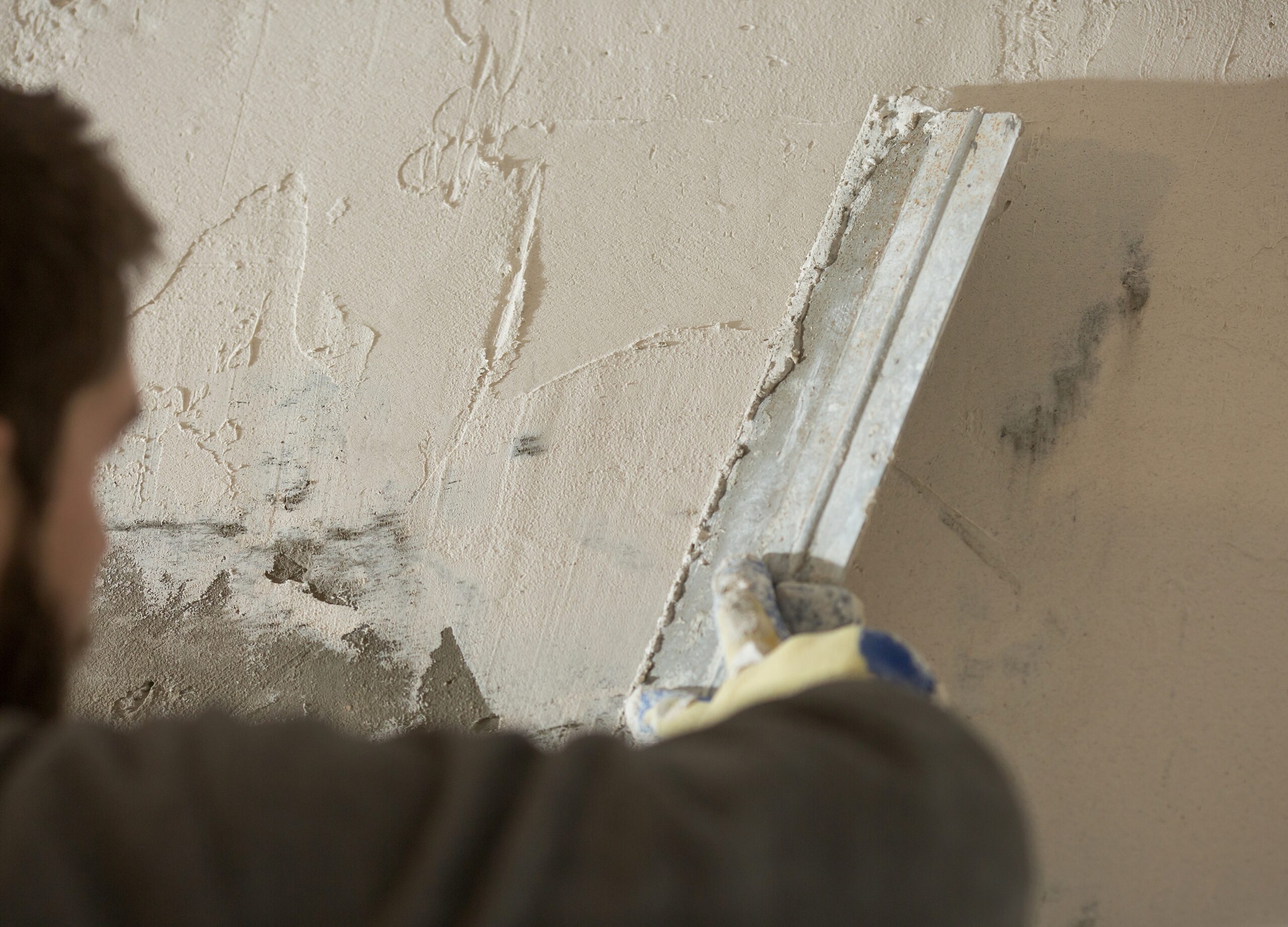
Fresh plaster usually takes between a few days and several weeks to dry fully. A thin skim coat may dry within three to seven days in suitable conditions, while thicker plaster, deep repairs or several newly plastered surfaces can take two to four weeks.
At Renshaw Joinery and Building Services, we always advise customers to assess the condition of the plaster rather than rely on a fixed number of days. Temperature, ventilation, humidity, plaster thickness and the surface underneath can all affect the drying time.
You should wait until the entire wall or ceiling has turned an even pale colour before you start painting or decorating. Darker patches usually indicate that moisture remains in the plaster.
Our plasterers in Mansfield explain what to expect after the work is complete and provide guidance based on the type and depth of plaster we have applied.
How long does skimmed plaster take to dry?
A skim coat usually dries faster than full re-plastering because we apply a relatively thin finishing layer over an existing wall or ceiling.
In a warm room with steady ventilation, skimmed plaster may dry within three to seven days. Colder rooms, external walls and areas with deeper repairs can take longer.
The main face of a wall may turn pale before the corners, edges and repaired sections. Wait until the complete surface has dried evenly, rather than painting as soon as the largest area looks ready.
We also recommend checking around:
- Window reveals.
- Door frames.
- Electrical sockets.
- Ceiling edges.
- External corners.
- Areas where we completed deeper repairs.
These sections can contain more plaster and often need additional drying time.
How long does full plastering take to dry?
Full re-plastering normally takes longer than skimming because the work may include deeper coats, repairs or a new base before we apply the final finish.
A fully plastered room may take 1 to 4 weeks to dry, depending on the amount of work and the conditions inside the property. Deep repair work and solid-wall plastering often take longer than a light skim over plasterboard.
If we plaster several walls and a ceiling at the same time, the room will also contain more moisture. Good ventilation helps ensure that the moisture leaves the property gradually.
We explain the expected drying period upon completion of the job, though changes in temperature and humidity can still affect the final timescale.
How can you tell if plaster is dry enough to paint?
Dry plaster normally has an even, pale appearance. Fresh plaster starts darker and gradually lightens as the moisture leaves the surface.
Look for the following signs before painting:
- The whole surface has become a consistent pale colour.
- No dark or cloudy patches remain.
- Corners and edges match the centre of the wall.
- The room no longer feels unusually damp.
- Condensation has reduced.
- The plaster does not feel cold or clammy.
Do not judge the plaster by touch alone. The surface can feel dry while moisture remains deeper within the wall.
When you are uncertain, allow more drying time. Waiting a little longer is usually easier than repairing paint that has peeled or failed to adhere.
What affects how long plaster takes to dry?
Several factors influence the drying time. Two rooms plastered on the same day may dry at different speeds because the surfaces and conditions are not identical.
The thickness of the plaster
A thin skim coat contains less moisture than a deep repair or full plaster system, so it normally dries more quickly.
Where we need to level uneven areas or repair damaged plaster, those sections may remain darker after the rest of the wall has lightened.
The surface underneath
Plasterboard, existing plaster, brick and blockwork absorb moisture differently.
A skim over suitable plasterboard may dry faster than plaster applied to a solid or highly absorbent wall. Different backgrounds within the same room can also create temporary variations in colour.
Room temperature
Cold conditions slow the drying process. Gentle and consistent background heating can help maintain suitable conditions, particularly during winter.
Avoid sudden increases in temperature. Intense heat directed at the wall can dry the surface too quickly, leaving moisture beneath.
Ventilation
Fresh air helps moisture escape from the room. Open windows slightly where practical and allow air to move through the space.
You do not need to create a strong draught. Regular, gentle ventilation usually supports a more even drying process.
Humidity
Plaster dries more slowly when the surrounding air already contains a lot of moisture.
Bathrooms, kitchens, extensions and properties undergoing complete renovation work can remain more humid because several wet materials may be drying at the same time.
The time of year
Plaster often dries faster during warmer months because air temperatures are higher and homeowners can ventilate rooms more easily.
During winter, allow additional time and maintain steady background warmth without overheating the room.
Should you open windows while plaster dries?
Opening windows slightly can help moisture leave the room. This works particularly well when the weather is mild and dry.
In colder conditions, balance ventilation with gentle heating. Leaving a room extremely cold can slow the drying process, while sealing it completely can trap moisture.
We recommend:
- Opening windows for regular periods.
- Keeping internal doors open where practical.
- Maintaining a steady room temperature.
- Moving furniture away from newly plastered walls.
- Avoiding heavy condensation.
- Allowing air to circulate around corners and alcoves.
The aim is to create steady drying conditions rather than forcing the moisture out as quickly as possible.
Can you make plaster dry faster?
You can support the drying process, but do not rush it with intense heat.
Avoid pointing fan heaters directly at freshly plastered walls or ceilings. Strong heat can cause the outer surface to dry much faster than the underlying plaster, which may lead to cracking or an uneven finish.
To help plaster dry safely:
- Maintain gentle background heating.
- Provide regular ventilation.
- Keep the room reasonably clear.
- Move furniture away from the walls.
- Avoid covering the plaster.
- Allow deeper repairs extra time.
- Keep the temperature consistent.
Natural drying takes time. A few extra days can help protect both the plaster and the paint finish that follows.
How long should plaster dry before painting?
You should only paint plaster after it has fully and evenly dried.
A light skim may be ready within around a week in suitable conditions. Full plastering, deep repairs or cold weather can extend the wait to several weeks.
Do not paint while:
- Dark patches remain.
- The surface colour looks uneven.
- Corners still appear damp.
- The wall feels cold or clammy.
- The room has heavy condensation.
- Repairs remain visibly darker than the surrounding plaster.
Painting too soon can trap moisture beneath the coating, leading to peeling, blistering, or patchy colour.
Once the plaster has dried, prepare it correctly before applying your final paint.
Does new plaster need a mist coat?
New plaster normally needs a mist coat or another suitable treatment recommended by the paint manufacturer.
Fresh plaster is highly absorbent. Applying ordinary, undiluted emulsion directly to the surface can prevent the paint from bonding correctly.
A mist coat uses a suitable diluted paint to create a base for the finishing coats. Follow the instructions for your chosen product because the recommended preparation can vary between paints.
Never apply a mist coat while the plaster remains damp. The surface must dry fully first.
What happens if you paint plaster too early?
Painting before plaster has dried can cause problems that take longer to correct than the original wait.
Common issues include:
- Peeling or flaking paint.
- Blisters beneath the surface.
- Patchy colour.
- Poor adhesion.
- Damp marks are showing through.
- An uneven finish.
- Moisture is becoming trapped behind the paint.
In some cases, you may need to remove the failed coating, allow the plaster to dry and prepare the surface again.
Waiting until the wall has become evenly pale helps protect the finished room and avoids unnecessary decorating work.
Why is the plaster drying unevenly?
Patchy drying does not always indicate a problem.
Some sections may contain more plaster because we needed to repair cracks, fill hollows or level the background. Corners and external walls can also dry more slowly.
The surface underneath may vary across the wall. For example, part of the wall may contain old plaster, while another section may include new plasterboard or a deeper repair.
Continue ventilating the room and allow the darker areas to catch up. Do not paint the wall simply because most of it appears dry.
Why is my plaster taking longer to dry?
Plaster may take longer than expected because of:
- Cold weather.
- High humidity.
- Limited ventilation.
- Thick plaster coats.
- Deep repairs.
- Solid or damp backgrounds.
- Several plastered walls in one room.
- A newly plastered ceiling.
- Moisture from other building work.
A property renovation may include fresh plaster, concrete, screed and paint at the same time. Each material releases moisture into the building, which can slow the overall drying process.
When plastering forms part of our property renovations in Mansfield, we schedule the work carefully and allow for drying before later finishes begin.
When should plastering happen during building work?
Plastering usually takes place after structural work and first-fix plumbing and electrical work.
Completing those jobs first reduces the risk of another trade cutting into newly plastered walls to install pipes, cables or structural components.
We regularly coordinate plastering with:
- House extensions in Mansfield.
- Structural alterations in Mansfield.
- Property renovations in Mansfield.
- Kitchen fitting in Mansfield.
Planning the trades in the correct order protects the completed plaster and helps prevent repeated work.
How long does ceiling plaster take to dry?
Ceiling plaster generally follows the same drying process as wall plaster.
A light ceiling skim may dry within several days, while deeper repairs or complete re-plastering can take longer. The temperature and ventilation inside the room will also affect the result.
Check the entire ceiling before decorating. Areas around external walls, beams, corners and repaired sections may stay darker after the centre has dried.
Do not assume that a ceiling is ready simply because the largest section has changed colour.
How long does plaster take to dry in winter?
Plaster often takes longer to dry during winter because temperatures remain lower and homeowners open windows less frequently.
A light skim that dries within a few days during warmer weather may need a week or more in colder conditions. Thicker plaster can take considerably longer.
Use gentle background heating and regular ventilation. Avoid making the room very hot for a short time and then letting it cool down again.
Consistent conditions usually support more even drying.
How long does plaster take to dry after a repair?
Small repairs may dry within a few days, although the depth of the repair matters more than its visible size.
A narrow but deep repair can hold more moisture than a broad and shallow skim. Areas repaired after plumbing, electrical or structural work may therefore remain darker for longer.
After structural alterations, we explain which areas may need additional drying time before painting begins.
Speak to our plasterers in Mansfield
The answer to “how long does plaster take to dry?” depends on the surface, the depth of the work and the conditions inside your property.
A light skim may dry within a few days, while full replastering or deeper repairs can take a few weeks. Wait until the entire surface is evenly pale before painting or decorating.
At Renshaw Joinery and Building Services, we provide wall and ceiling plastering, skimming, repairs and dry lining across Mansfield and the surrounding areas.
Learn more about our plastering services in Mansfield or contact our team to discuss your project.